The Long Road Forward
“I came a long way, still got a long way to go.”
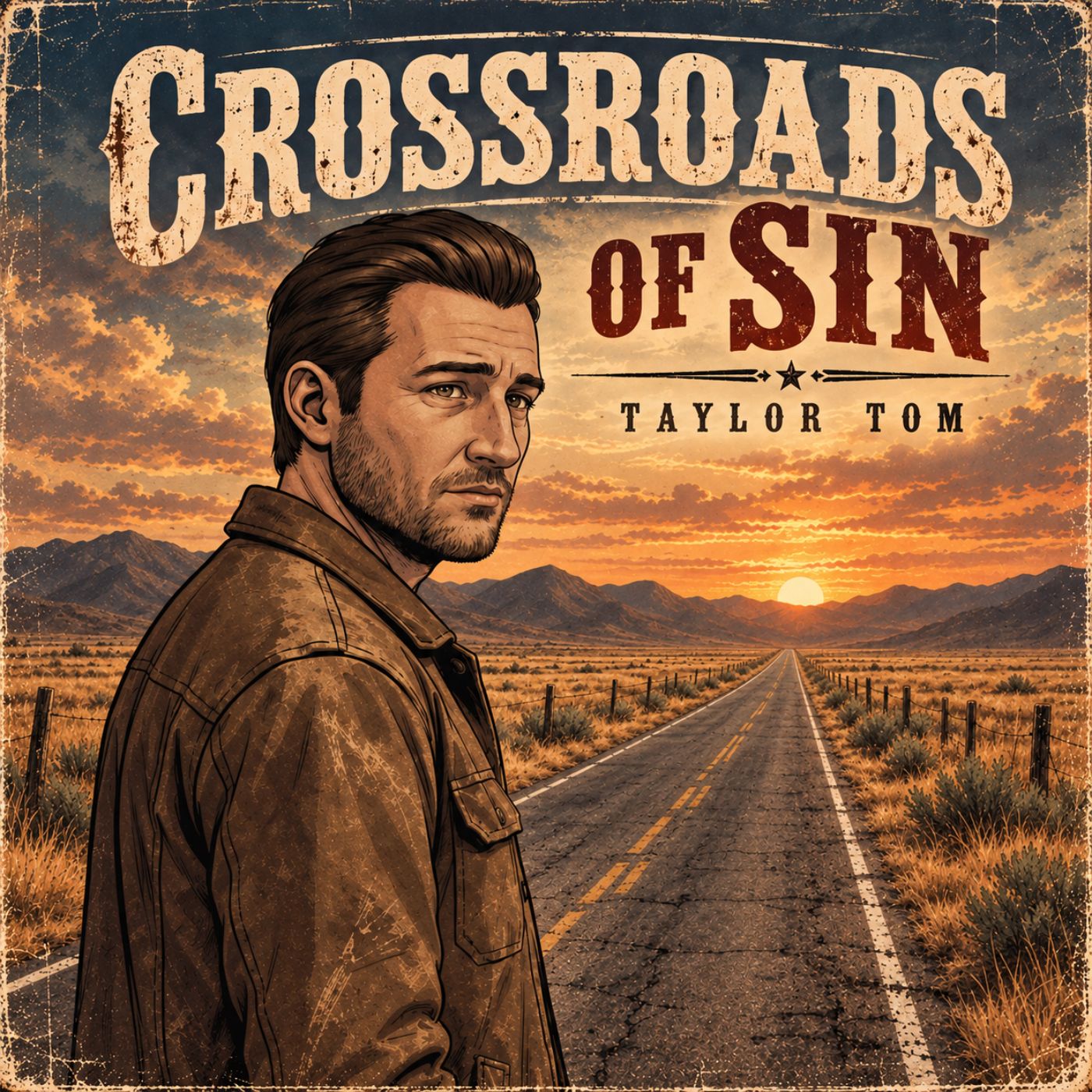
That line sits at the center of Crossroads of Sin, the latest release from Taylor Tom (9/18/2026).
It is a song about progress without pretending the journey is finished. About carrying the weight of where you have been while continuing to move toward somewhere better. And, perhaps most importantly, about refusing to turn around when the road ahead still looks impossibly long.
For Taylor, that message is personal.
Watch the official music video here.
A Song That Started With a Rhythm
Crossroads of Sin began in an ordinary place.
Taylor was taking a shower when a rhythm came into his head, along with the first words:
“Came a long way, still got a long way to go.”
When he got out, he wrote the words down and began working out the melody on his guitar.
Unlike songs that take weeks of rewriting, this one came quickly.
“It was like it was meant to be written and played,” Taylor says.
There were a few places where the lyrics took more work, but the song was largely written within a day.
The result carried the sound Taylor had been hearing from the beginning: a blend of country and blues, driven by guitar and built around perseverance.
Coming a Long Way Doesn't Mean You've Arrived
There is a tension running through Crossroads of Sin.
Taylor can look backward and recognize real progress while simultaneously looking forward and seeing how much road remains.
That tension is captured in another lyric:
“I came a long way, compared to where I've been.
I came a long way, ain't going back again.”
For Taylor, those words aren't abstract.
His life has included serious harm, consequences, incarceration, growth, family, accountability, and years of trying to become someone different from the young man he once was.
One of the experiences behind the song was returning to court and once again receiving a sentence of life without parole despite the changes he had made over the years.
It is difficult to imagine a clearer example of the contradiction at the heart of the song:
You can have come an extraordinary distance and still find yourself standing in front of a very long road.
That doesn't erase the distance already traveled.
And it doesn't mean you stop walking.
Pain, Hope and Perseverance
Taylor describes the emotional center of the song with three words:
Pain. Hope. Perseverance.
The pain is there, sometimes more in the music than in the words themselves. But Crossroads of Sin isn't primarily a song about remaining inside that pain.
It's about working through it.
Taylor puts it simply:
“I've been through a lot and I've got to keep going.”
That doesn't mean pretending the past disappeared.
Taylor speaks openly about the harm he caused earlier in his life and the responsibility that remains connected to it.
“I will never be able to ignore harms I've caused,” he says. “They will always be there. Working through it is what I can do, and try to help others work through their pains to begin healing.”
That perspective matters to the meaning of Crossroads of Sin.
Moving forward isn't presented as forgetting what happened behind you.
It's moving forward while carrying what you've learned from it.
The Crossroads
When Taylor pictures the song visually, he sees a crossroads.
A desert.
Mountains.
Dark reds, yellows and oranges.
But despite the title Crossroads of Sin, the emotional world he describes isn't primarily dark.
He describes it as hopeful, peaceful and spiritual.
The crossroads represents something larger than a single decision between right and wrong.
It represents the many moments when a person has to decide whether to keep moving.
Whether to go backward.
Whether the distance still ahead is reason enough to quit.
Or whether another step is enough for today.
There may never be one dramatic moment when the journey is suddenly finished.
Taylor describes the song as having a kind of push and pull because there is no easy finish line.
The journey continues.
From Guitar to the Full Production
Taylor originally wrote Crossroads of Sin on guitar, and the song exists in two very different forms.
The acoustic version reflects the way Taylor plays it himself: direct, intimate and rooted in the guitar and vocal.
The fully produced version expands that foundation into a Southern-rock and country-blues arrangement, adding instrumentation and a guitar solo while preserving the melody and structure Taylor originally created.
Taylor contributed the lyrics, melody, vocal arrangement and overall song arrangement.
Both versions ultimately tell the same story from different musical perspectives.
One lets the writing stand almost completely exposed.
The other gives the journey a larger landscape.
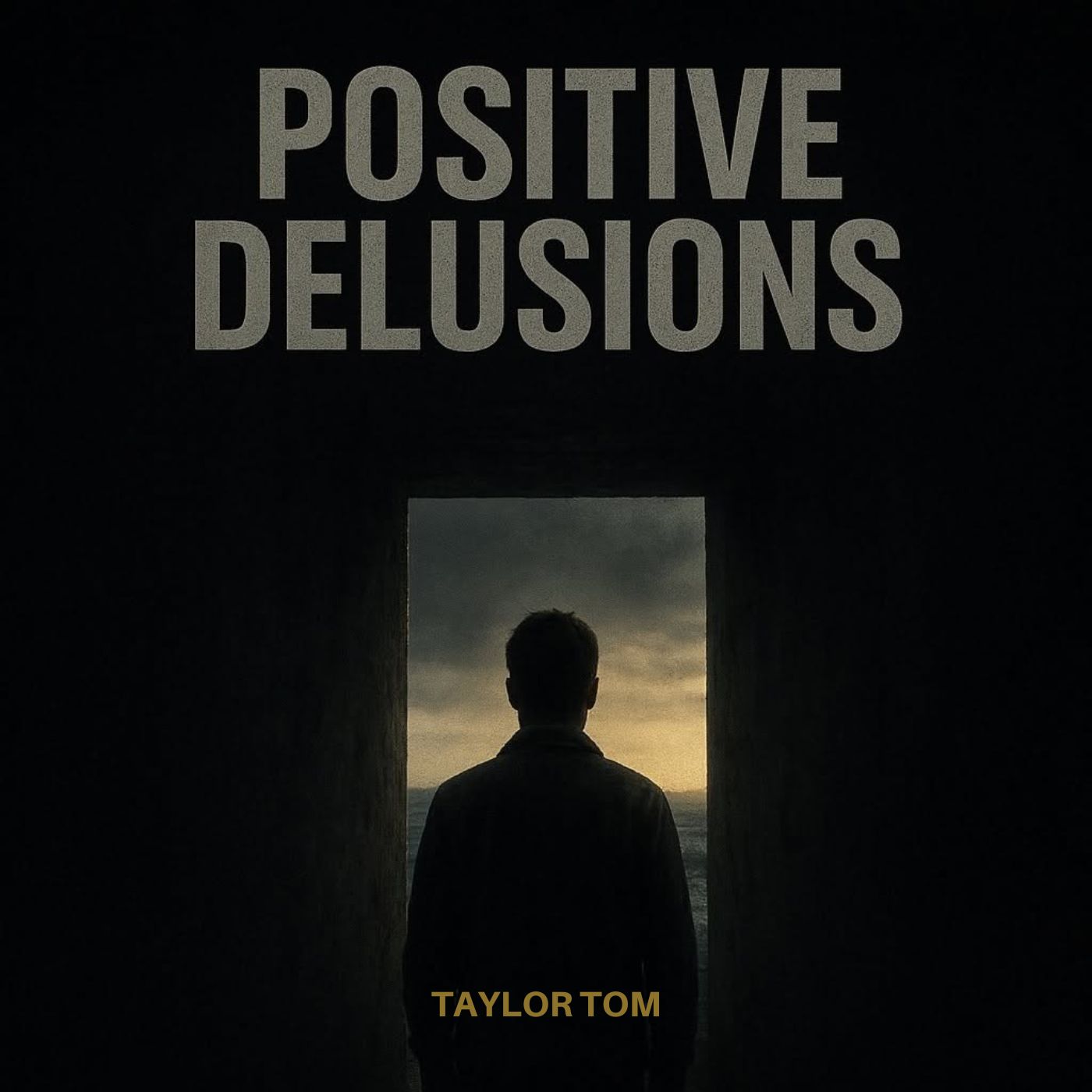
A Different Side of Positive Delusions
Listeners familiar with Taylor's previous release Positive Delusions may recognize a connection between the two songs.
Taylor describes Positive Delusions as being about having a vision for a brighter future even when the present doesn't provide much evidence that it will happen.
Crossroads of Sin explores another part of that idea.
It is about the road required to get there.
The setbacks.
The distance.
The moments when the destination still feels far away.
And the decision to continue anyway.
One song imagines the future.
The other keeps walking toward it.
“A Piece of My Soul”
Taylor says that every song reveals something new about him.
“With every new song, a piece of my soul is revealed.”
Crossroads of Sin reveals someone who doesn't see growth as a completed transformation.
There is no declaration that everything has been overcome.
No clean ending where the past disappears and the future becomes certain.
Instead, there is movement.
Taylor has come a long way.